
So, you’ve got some baby chicks — maybe quail or chickens — and now you’re wondering where to keep them warm and safe until they grow their feathers. Don’t worry! You don’t need to spend a ton of money on a fancy setup. Let me show you how I built a simple, inexpensive brooder that works great.
Start With a Simple Plastic Tote
You don’t need anything special to start — just grab a large plastic tote. The size depends on how many chicks you have. I’ve got around 20 in mine, and it works perfectly.
The tote keeps things tidy and gives the chicks a safe, cozy space. It’s easy to clean and move around too.
Cut the Lid for Ventilation
Next, grab the lid and cut out about half (maybe a little more) of the top. This opening gives your chicks some fresh air and prevents overheating.
To cover the hole, attach some strong wire mesh. I used something heavier than chicken wire because small rodents can squeeze through that. Drill a few holes around the cutout and use zip ties to secure the mesh. That keeps your chicks safe from curious cats and other critters that might try to get in.
Heating Things Up
Baby chicks need warmth — especially in the first couple of weeks. You can use a heat lamp or a ceramic heat element.
I used to use the 125- or 250-watt heat bulbs, but after having a couple of them shatter, I switched to a ceramic heat element. It doesn’t get quite as hot as the bulbs, but it’s safer and lasts longer.
I hang mine from the inside of the lid. You could also set a lamp above the mesh if you’re using a bulb. Just make sure the chicks have both warm and cooler spots in the brooder so they can move where they’re comfortable.

- 24/7 Pure Heat, Zero Light: Perfect for nocturnal reptiles & simulating natural…
- High-Efficiency 100W Ceramic Core: Generates intense, deep-penetrating infrared…
- Exceptional Durability & Long Lifespan: Crafted from premium shock-resistant…
Last update on 2026-10-27 / Affiliate links / Images from Amazon Product Advertising API
Controlling the Temperature
To make things easier, I use a thermostat controller — mine’s an Inkbird model (check out my blog post on this thermostat here). It costs around $30, but it’s worth every penny.
Here’s how it works:
- You set the desired temperature (I start mine at about 100°F for quail chicks).
- The thermostat turns the heat on when it drops below your set range (like 95°F) and off when it reaches the top (100°F).
- Each week, I lower the temp a bit until the chicks are feathered out and ready for the coop.
The thermostat has a little probe you place about an inch above the bedding to get an accurate reading where the chicks actually are.
If your brooder is inside a warm house, you might not even need a thermostat — just keep an eye on the temperature yourself.
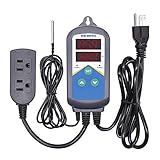
- Convenient Design: Plug and play, easy to use. Support reading with Centigrade…
- Dual Display Window: Be able to display measured temperature and set temperature…
- Heating Only: On/Off control. No cooling. Both outlets for heating; total load…
Last update on 2026-10-27 / Affiliate links / Images from Amazon Product Advertising API
Add Bedding, Food, and Water
For bedding, I use pine wood chips. They’re easy to find and compost nicely when it’s time to clean up. Every few days, I dump the old bedding into the compost bin and add fresh chips.
You’ll also need a couple of small waterers and feeders. Set them up so they’re easy for the chicks to reach but not easy to tip over.
Cost and Reusability
All in all, you can build this whole brooder for around $50 or less:
- Plastic tote
- Wire mesh
- Zip ties
- Heat element or lamp
- Thermostat controller
It’s a one-time investment that will last you for years. I reuse mine over and over for every new batch of chicks.
Final Thoughts
Raising chicks doesn’t have to be expensive or complicated. With a simple tote, some wire, and a safe heat source, you can make a warm and secure home for your little birds.
I’ve been rotating chicks through this same brooder for a long time, and it works great. Once they’re big enough, I move them out and get ready for the next batch.


