
Homestead Trees: Learn To Plant, Nurture, and Reap The Benefits
Pest Control
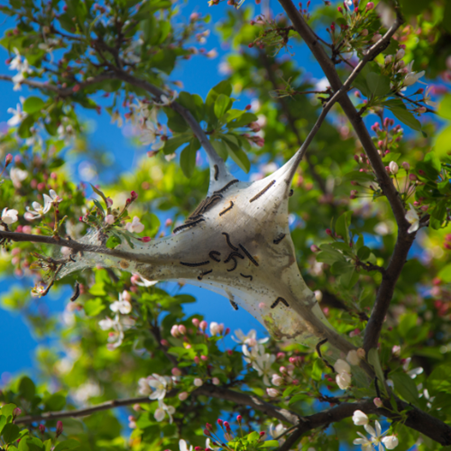
Nature will bear the closest inspection. She invites us to lay our eye level with her smallest leaf, and take an insect view of its plain. -Henry David Thoreau
Pests can be extremely devastating to productive trees, causing significant damage to the tree’s health and reducing its ability to produce fruit or nuts.
Ways Pests Can Cause Tree Damage
Pests can cause direct damage to a tree’s leaves, fruit, branches, and roots. For example, some pests can chew through leaves and fruit, reducing the tree’s ability to photosynthesize and produce energy. Other pests can burrow into the tree’s bark, causing wounds that can become entry points for disease and infection.
In addition to direct damage, pests can also transmit diseases that can further harm the tree. For example, some insects can carry plant pathogens that cause diseases like fire blight, which can cause extensive damage to fruit trees.
If left untreated, pest infestations can severely reduce a tree’s productivity and even lead to its death. Therefore, it is important to monitor trees regularly for signs of pest infestation and take steps to manage pests as soon as they are detected, such as through cultural practices, biological control, and organic spray treatment if necessary.
Common Pest Issues and Treatments
Here are some common pest issues for fruit and nut trees and some organic methods of control.
- Aphids: These small insects suck sap from leaves and stems, causing yellowing and distortion. Control them with insecticidal soap, horticultural oil, or natural predators such as ladybugs.
- Codling moths: The larvae of these moths burrow into apples, pears, and walnuts, ruining the fruit. Control them with pheromone traps, crop covers, and beneficial nematodes.
- Japanese beetles: These beetles feed on leaves, flowers, and fruit, leaving behind only the skeletons. Control them with insecticidal soap, neem oil, or natural predators such as birds and parasitic wasps.
- Scale insects: These small, armored insects feed on plant sap and secrete a sticky substance known as honeydew. Control them with insecticidal soap, horticultural oil, or natural predators such as ladybugs and parasitic wasps.
- Tent caterpillars: These caterpillars defoliate fruit and nut trees, causing significant damage. Control them by handpicking and destroying the nests, or by using a biological control such as Bacillus thuringiensis.
It’s important to properly identify the pest and to follow the instructions on any pest control product carefully.
Download: Pest Control Checklist PDF